


Town History
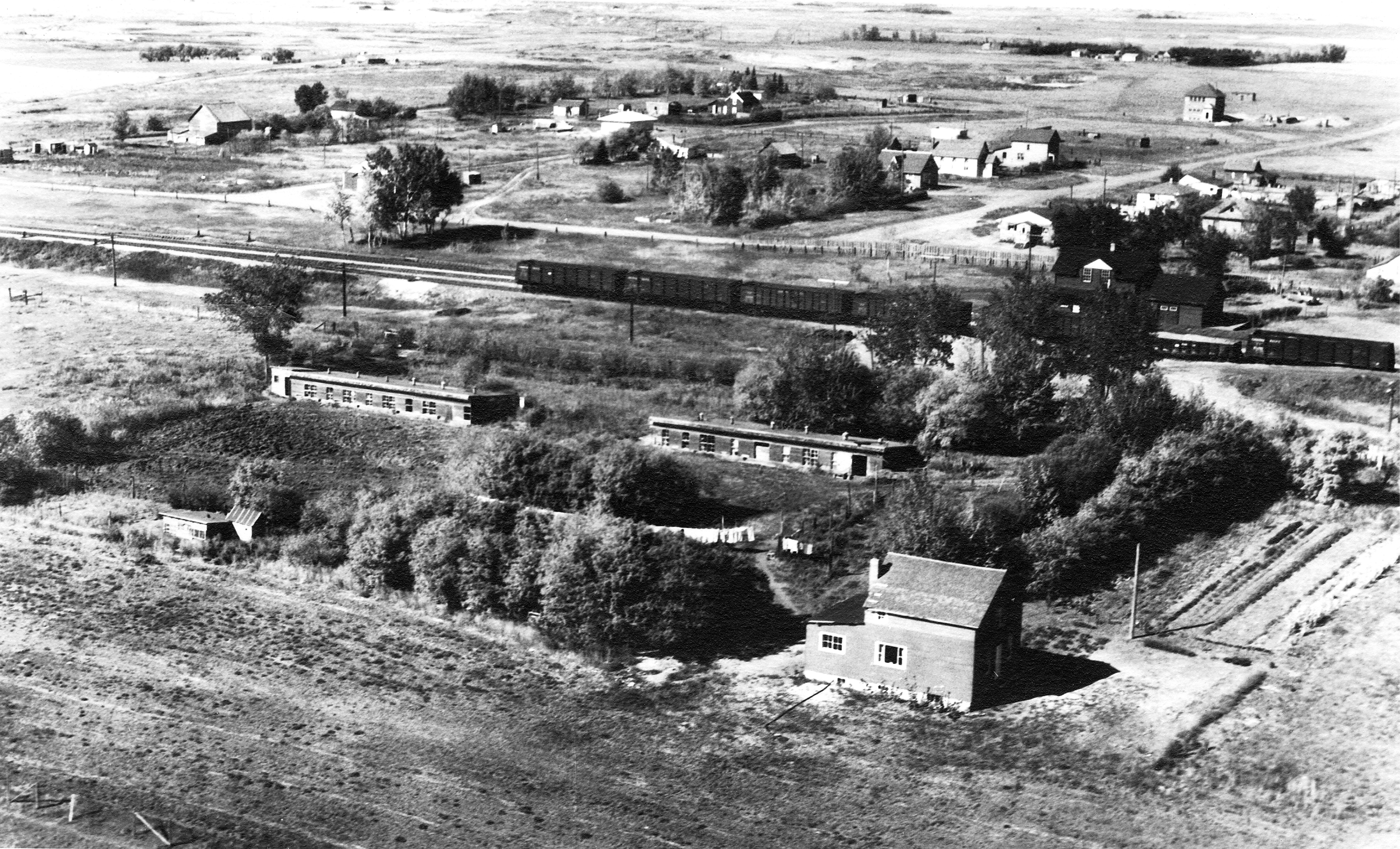
Pilot Butte is located on Treaty 4 Territory and has a rich history that begins long before European settlement. The area was home to Indigenous peoples, who used the nearby hill—known as the “butte”—as a lookout and gathering place.
European settlement can be traced to around 1840's, with homesteading taking place starting around 1880. The arrival of the Canadian Pacific Railway in 1882 played a key role in establishing the community, as local sand and gravel deposits were used in railway construction and early development, resulting in Pilot Butte being known as the "Sand Capital of Canada".
Pilot Butte was officially named approximately 1883 and grew quickly as agriculture expanded and industry developed. Brick plants became major employers, and by the early 1900s the community featured a range of businesses, services, and a school. The village was incorporated in 1913 during this period of growth.
However, the closure of the brick plants during World War I and improved transportation to nearby Regina led to a population decline. The village was dissolved in 1923 and experienced several decades of reduced activity.
Pilot Butte reincorporated as a village in 1963 and gained town status in 1979, and has since evolved into a thriving residential community, balancing its small-town character with steady development and modern amenities.
Today, Pilot Butte continues to honour its history while building for the future as a vibrant and growing community just east of Regina.